This isn't just an app. It's the thing I needed and couldn't find.
There's a moment during IVF that nobody talks about — not the shots, not the retrieval, not the beta call — it's the moment where you're sitting on your bathroom floor at 11 PM with six different medication bottles, a crumpled paper printout from your clinic, and absolutely no idea if you already took your Prednisone today or if that was yesterday.
That was me. August 2023. Third frozen embryo transfer. The one that would eventually give me my daughter — but I didn't know that yet. All I knew was that I was managing Estrogen patches, progesterone injections, Prednisone, Benadryl, blood thinners for my Antiphospholipid Syndrome, and intralipid infusions, and the only organizational system my $30,000 clinic provided was a photocopied sheet of paper with tiny boxes I was supposed to check off with a pen.
A pen. In 2023. For the most medically complex, emotionally devastating, financially ruinous process of my life.
I remember thinking: there has to be an app for this.
There wasn't.
I looked. Trust me, I looked.
During my IVF cycle, I downloaded every fertility app I could find. And I don't mean I casually browsed — I am a marketer by trade. I've been CMO at Neopets, among other prominent tech companies. I know how to evaluate products. I dissected every fertility app on the market with the critical eye of someone who builds user experiences for a living and the desperation of someone who needed this to exist.
Here's what I found:
Flo is a period tracker. A very good period tracker. But IVF isn't a period. IVF is a six-month medical odyssey with injectable medications, blood draws every 48 hours, retrieval surgery, embryo grading, genetic testing, frozen transfers, and beta HCG monitoring — none of which Flo is designed to handle. It's like trying to use a bicycle on a highway. Great product. Wrong job.
Embie exists and has IVF-specific features, but when I used it, it felt clinical and cold. It was tracking cycles, not supporting me. There was no warmth, no personality, no sense that the people who built it understood what it felt like to stare at a pregnancy test at 5 AM with shaking hands. It was a spreadsheet with a nice UI. I needed a companion.
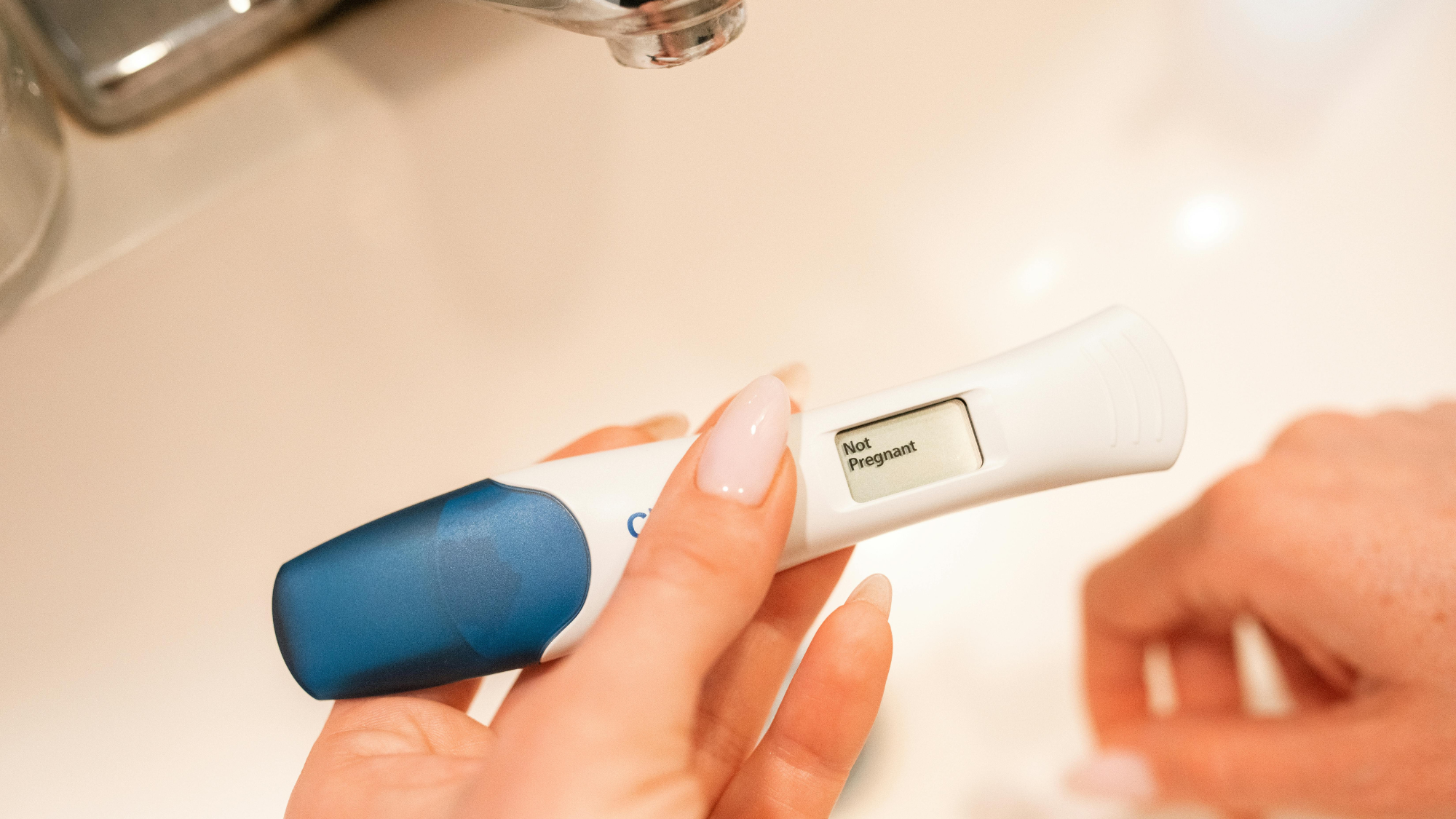
Generic test scanners could tell me positive or negative — which, honestly, I could figure out myself. What I needed was someone (something?) to look at my faint line at 5dp5dt, factor in that I was using an Easy@Home strip with a known sensitivity threshold, cross-reference it with my days post transfer, and tell me whether a line that faint at that stage was within the range of normal for pregnancies that went on to be viable. That didn't exist.
Nothing supported my situation. I was a single mother by choice, using donor sperm, with an autoimmune disorder, managing a medication protocol that looked like a pharmacy inventory, dealing with the emotional fallout of a failed transfer and a miscarriage — and the best technology the fertility industry offered me was a paper printout and a general-purpose period tracker.
I'm not a person who accepts that.
The notebook that became an app
During my stims cycle, I started keeping a notebook. Not a journal — a data notebook. I tracked every injection, every dosage, every side effect, every blood draw result, every ultrasound measurement, every HCG number. I wrote down which shots burned (Menopur, always Menopur) and which ones left welts (Ganirelix, every single time). I noted that Gonal-F made me bloated but emotionally stable, while Ganirelix turned me into a person who cried at dish soap commercials.
After my retrieval — which yielded 20 follicles, 7 embryos, 5 viable after PGS testing, all 4AA grade — I kept tracking. Through the OHSS hospitalization. Through the first transfer that failed. Through the second transfer that ended in a chemical pregnancy at 6 weeks. Through the third transfer, where I was more scared than excited, pumped full of blood thinners and Prednisone and hope.
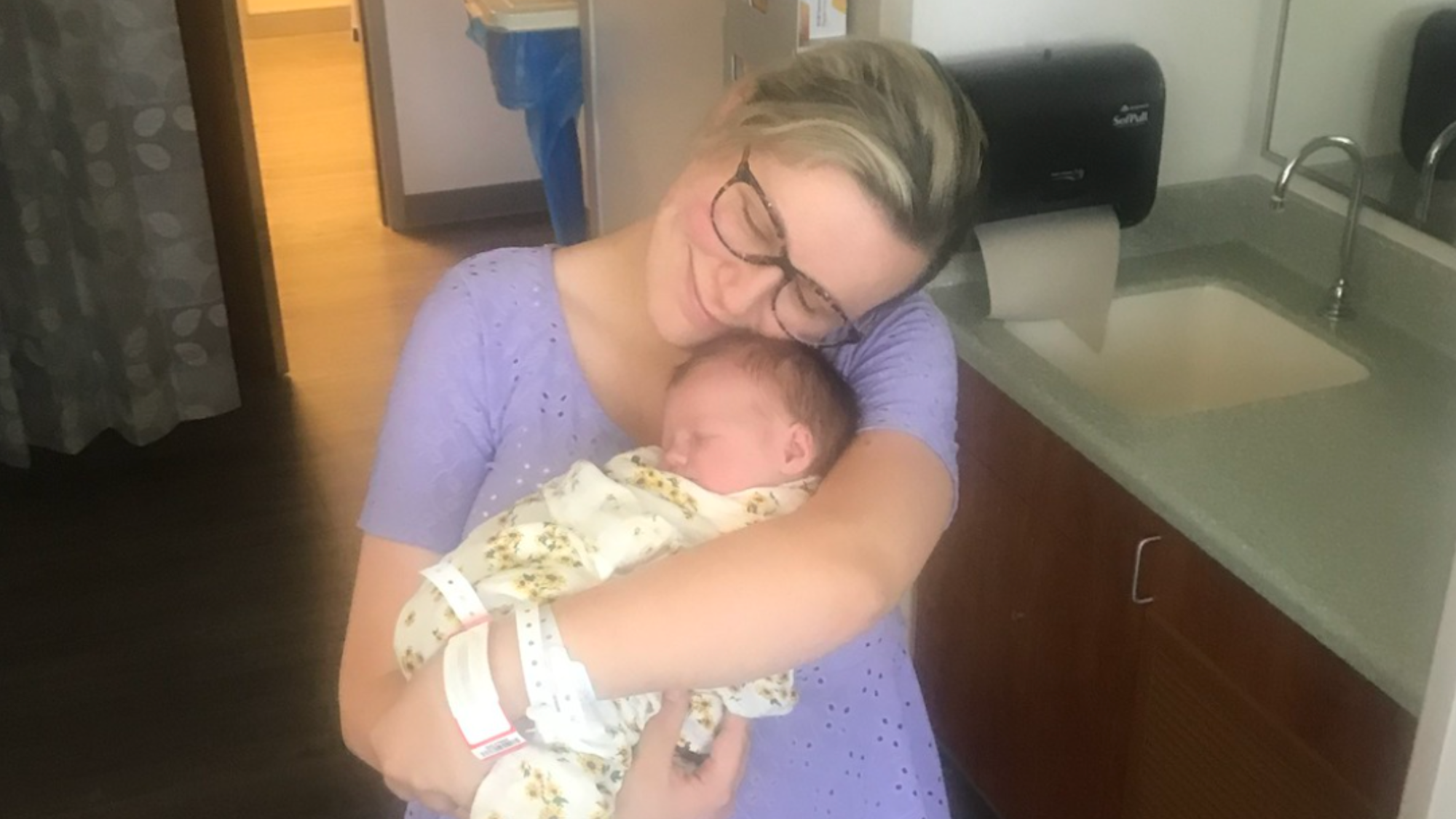
By the time Sadie was born on July 9, 2024, I had a notebook full of data that no app had ever asked me to collect — and that no app could have helped me interpret.
That notebook is the blueprint for Babiedust.
What Babiedust actually is
Babiedust is the app I needed and couldn't find. It's a global, AI-powered companion for every type of fertility treatment — IVF, IUI, FET, egg freezing, surrogacy, and donor conception.
But I want to be specific about what "companion" means, because the fertility app space is full of tools that track things without actually helping.
The AI medication manager is the feature I'm most passionate about, because it's the thing that nearly broke me. If you're managing 5–10 medications during an IVF cycle — different dosages, different timing, different routes of administration, some with food, some without, some that interact with each other — you deserve better than a paper printout. Babiedust tracks your full protocol, flags timing conflicts, catches potential interactions, and sends you reminders that actually tell you what to take and when and how. It's the nurse in your pocket at 11 PM when the clinic is closed and you can't remember if you already took your Prednisone.
The AI test scanner doesn't just tell you positive or negative. It estimates HCG levels from line darkness, factoring in which test brand you're using (because a faint line on a First Response means something very different than a faint line on an Easy@Home), your days post transfer or ovulation, and historical outcome data. When I was squinting at a shadow of a line at 5dp5dt, I would have given anything for this.
Every family structure. Babiedust works for LGBTQ+ couples, single parents by choice, people using donors, people using surrogates, and gestational carriers themselves. Not as an afterthought. Not as a setting you toggle. As a foundational design principle — because I built this as a single mother by choice, and I refuse to build something that treats my family structure as an edge case.
Fertility tourism mode. Millions of people travel internationally for fertility treatment — Spain alone sees 35% international patients. Babiedust auto-adjusts medication names to local brands when you change your location (because Gonal-F in the US might be sold under a different name in Prague), converts appointment time zones, provides country-specific treatment guides, and surfaces local clinic directories. This is the feature that doesn't exist anywhere else, and it matters enormously for the global fertility community.
The cycle cost tracker. Real-time tracking of what you've spent — medications, procedures, monitoring, travel, all of it — with insurance offset calculations where applicable. I wish I'd had this. I was blindsided by costs constantly. The surprise $800 blood panel. The $200 per vial of Menopur that my pharmacy didn't mention until checkout. The OHSS hospital stay that I'm still getting bills for. IVF patients deserve to see, in real time, what this is costing them.
Why a media brand too
Babiedust isn't just an app — it's a media brand. The blog you're reading right now is part of it.
Because here's what I learned during my IVF process: the information exists. It's out there. But it's scattered across Reddit threads and medical journals and Facebook groups and outdated clinic websites and conflicting forum posts from 2017. There's no single place where a woman going through IVF can find trustworthy, human, emotionally resonant information about what she's experiencing.
I'm building that place.
The Babiedust blog is medication guides written by someone who actually took the medications. It's HCG and beta number breakdowns from someone who watched her own numbers with the intensity of a day trader. It's country-by-country fertility tourism guides, clinic directories, cost breakdowns, and supplement deep-dives — all written in first person, all grounded in real experience, all free.
I'm not a doctor. I say that in every article and I mean it. But I'm something that most fertility resources aren't: I'm someone who's been through this. Who knows what it feels like to be told your insurance won't cover you because you're single. Who knows the specific flavor of grief that comes with a chemical pregnancy. Who knows what Ganirelix welts look like and what Menopur burning feels like and what a 1.78 HCG beta does to your heart.
I wanted a resource that didn't talk down to me, didn't sanitize the hard parts, didn't hide behind clinical language, and didn't pretend that IVF is anything other than the most brutal, beautiful, expensive, emotional thing a person can go through. That resource didn't exist. So I'm making it.
The name
Babiedust.
"Baby dust" is what the fertility community says to each other — it's the equivalent of "good luck," but softer, more magical, more hopeful. You'll see it in Reddit comments and Instagram captions and forum sign-offs: sending baby dust your way. It's silly and earnest and a little bit superstitious and exactly the kind of thing you cling to when science and medicine are the only thing standing between you and your dream of a family.
I believe in baby dust. Not literally — I'm not delusional. But I believe in the spirit of it: that hope matters, that luck charms and silly rituals and whispering to your embryo before a transfer are all valid ways of coping with a process that strips you of control. I believe in sending good energy into the universe even when the universe has been objectively unkind to you.
Babiedust is a little magic for your fertility process. That's all. And sometimes a little magic is everything.
What's next
I'm building the app. I'm writing the content. I'm doing this the way I do everything — by myself, with AI tools, on a startup budget, with the stubborn conviction that one person who's been through something can build better than a team who's observed it from the outside.
If you're going through IVF, IUI, egg freezing, or any part of the fertility process right now — I see you. I've been where you are. And I'm building this for you.
More content is coming. Medication guides, beta number breakdowns, cost trackers, country guides for fertility tourism, supplement reviews — all of it. If there's something specific you want me to write about, tell me. This is a conversation, not a broadcast.
And in the meantime — baby dust. All of it. Everything I've got.
I'm rooting for you.
— Michaela
Babiedust is currently in development. The blog and content hub are live now. The app is coming. Follow along on Instagram @babiedust or sign up for updates here at babiedust.com.