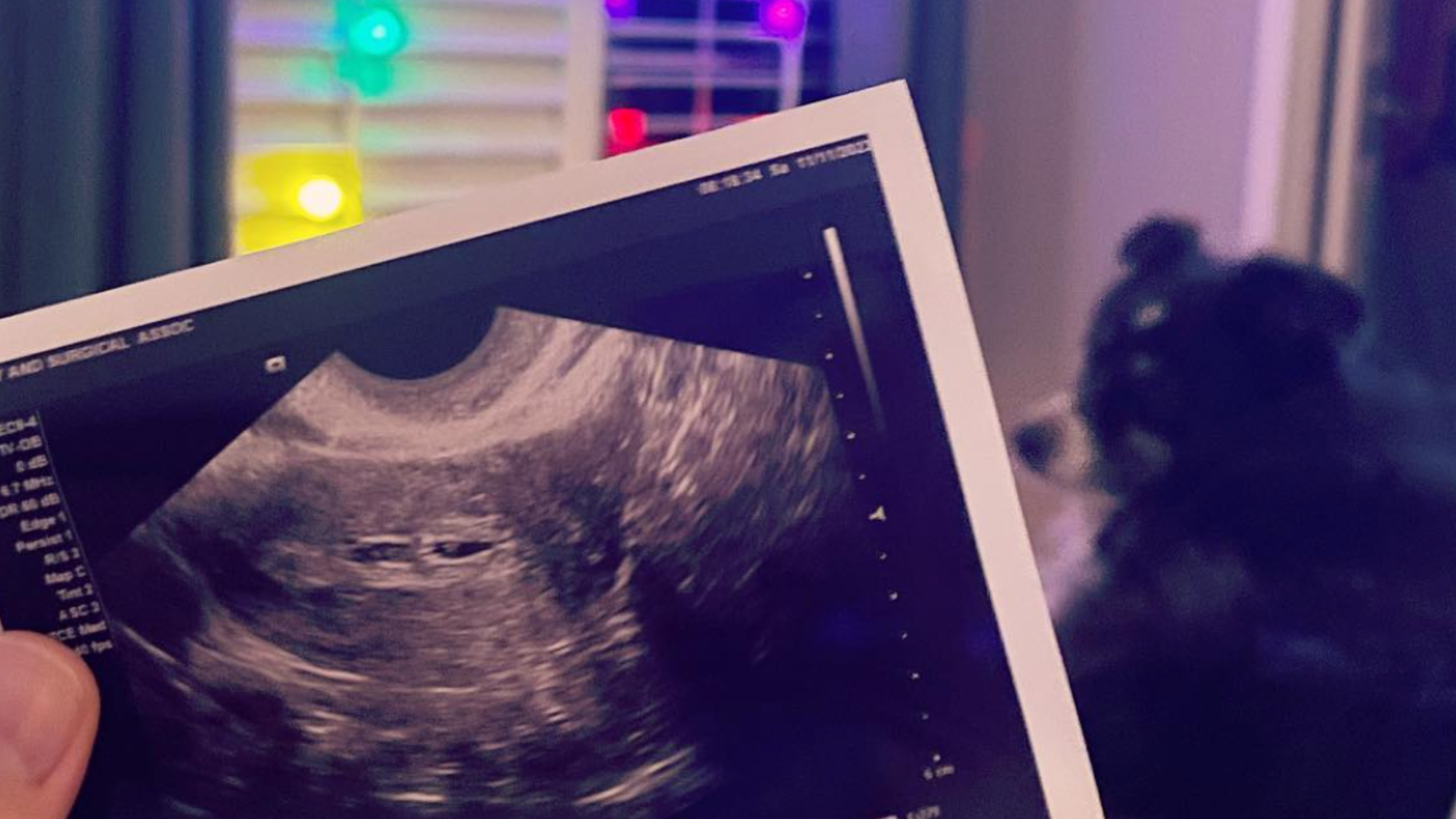
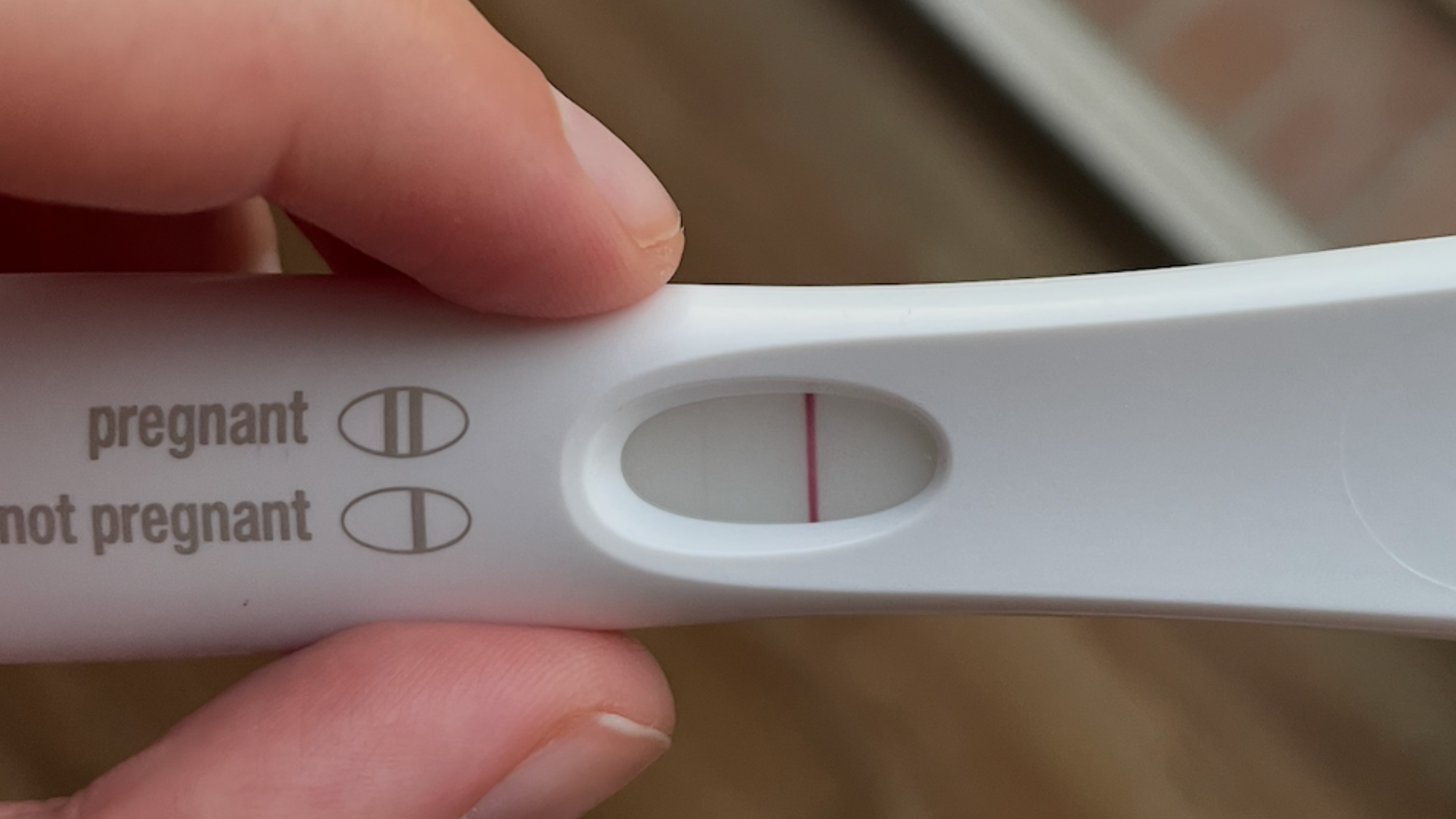
It's 4:47 AM. You're sitting on the bathroom floor in your underwear, holding a pregnancy test approximately three inches from your face, tilting it under the vanity light at seventeen different angles like you're appraising a diamond.
Is that a line? That's a line. Right? Or is that an indent? Is the lighting messing with me? Should I take it into the hallway? Let me take a photo and invert the colors on my phone—
If you're reading this, you're probably doing exactly what I did during each of my three frozen embryo transfers. You're testing early (before your official beta), you're seeing something on that test, and you're trying to figure out if that something means what you desperately want it to mean.
I've been the woman on that bathroom floor. Multiple times. Let me tell you what I've learned.
First Things First: Yes, IVF Patients Test Early. Clinics Hate It. We Do It Anyway.
Let's get this out of the way — your clinic probably told you to wait until your official beta blood draw and not to test at home. And that is very good medical advice that almost nobody follows.
The reason clinics say this is because home pregnancy tests can give ambiguous results in early IVF pregnancies. The trigger shot (if you had one recently) can cause false positives. Testing too early can give false negatives. And faint lines send patients into anxiety spirals that generate 47 calls to the nurse's line.
All valid. And yet.
You and I both know you're going to test. So let's at least understand what you're looking at.
What Causes a Faint Line?
A pregnancy test works by detecting HCG in your urine. The test line gets darker as HCG levels increase. So a faint line simply means: there is some HCG present, but not a ton.
After IVF, this can mean a few things:
You're testing early and it's a real positive. If you're testing at 5–7 days past a 5-day transfer (5–7dp5dt), your HCG levels are just starting to climb. A faint line at this stage is actually great news — it means the embryo has implanted and is producing HCG. It's just not producing very much yet because it's only been a few days. The line should get darker over the coming days.
It's an indent or evaporation line. Every test has a spot where the antibody strip sits. Sometimes you can see a faint shadow in the test line area even on a negative test — especially if you're looking at it 30 minutes after taking it (guilty) or if you pull the test apart (also guilty). Indent lines are usually colorless or grayish. A real positive, even a faint one, will have color — pink for pink-dye tests, blue for blue-dye tests.
It's residual trigger shot. If you had an HCG trigger shot (like Ovidrel, Pregnyl, or Novarel) and you're testing within 7–14 days of it, the trigger can cause a faint positive that has nothing to do with pregnancy. For FET patients on a medicated cycle (like I was), this is usually not an issue since most FET protocols don't use an HCG trigger. But if you did a fresh transfer or your protocol included a trigger, this is worth knowing about.
It's a chemical pregnancy in progress. I hate typing this, but it's the truth. Sometimes a faint line that doesn't get darker — or gets darker for a day and then fades — indicates a very early pregnancy that isn't going to be viable. This is what happened to me on my second transfer. I saw faint lines that gave me hope, and then they stopped getting darker. My beta confirmed what the tests were whispering.
The Brand of Test Matters More Than You Think
Not all pregnancy tests are created equal, and after going through this three times, I have opinions.
First Response Early Result (FRER): The gold standard for early testing. It detects HCG at about 6.3 mIU/mL, which is the lowest threshold of any major brand. If you're going to test early, use these. The pink dye is easier to read than blue dye, and indents are less common (though not impossible). This is what I used. This is what most IVF patients use.
Cheapies (Easy@Home, Wondfo, Clinical Guard): These are the bulk strip tests you can buy in packs of 50 on Amazon. They're less sensitive (usually 25 mIU/mL threshold), so they won't show a positive as early as FRER. But they're cheap enough that you can test multiple times a day without feeling like you're flushing money (just your sanity). A lot of IVF patients use a cheapie first and then "confirm" with a FRER.
Clearblue Digital: I have a love-hate relationship with these. On one hand, they remove the squinting — it says "Pregnant" or "Not Pregnant." On the other hand, they're less sensitive than FRER, so they might say "Not Pregnant" when a FRER would show a faint line. That disconnect will ruin your day. My advice: don't use digitals for early testing. Save them for when your lines are already obvious and you want the satisfaction of seeing the word.
Blue dye tests (anything with a blue line): Avoid these for early testing. Blue dye tests are notorious for showing faint blue lines that aren't real positives — the dye runs more easily. If you've ever seen someone post a test photo asking "is this real or is it the blue dye messing with me?" — that's why.
The Progression Game
Here's the thing nobody tells you before your first transfer: once you see a faint line, you will become obsessed with line progression.
Line progression means taking the same brand of test (ideally at the same time of day, with the same hold — morning pee is best because it's most concentrated) every day or every other day and comparing how dark the line gets.
A healthy early pregnancy shows lines getting progressively darker over several days. The line should be as dark as or darker than the control line by about 14–16 DPO (or 9–11 days past a 5-day transfer).
I did this. I laid my tests out in a row on the bathroom counter like evidence at a crime scene. I photographed them. I adjusted the contrast on my phone. I posted them in IVF Facebook groups asking strangers to squint at my tests. This is normal behavior in this community and I refuse to be embarrassed about it.
What's reassuring: Lines getting visibly darker every 48 hours. They don't need to darken every single day — HCG doubling time is 48–72 hours, so checking every other day is more meaningful.
What's concerning: Lines that plateau (same darkness for 3+ days), lines that get lighter after being dark, or no progression at all.
What's maddening but usually fine: Lines that seem the same today as yesterday. Test again tomorrow. HCG might have just crossed the "visible" threshold and needs another day to show meaningful darkening. I know the waiting is agony. I know.
My Testing Timeline (For Reference)
During my second transfer (the one that ended in a chemical):
- 5dp5dt: Squinter on FRER. I convinced myself it was an indent for about 3 hours before accepting it was faintly pink.
- 6dp5dt: Slightly darker. Hope ignited.
- 7dp5dt: About the same as day 6. First knot in my stomach.
- 9dp5dt (official beta day): Line was there but hadn't really progressed. Beta came back at 1.78. The rest you know.
During my third transfer (Sadie):
- I didn't test at home. I couldn't do it again. I waited for the beta call, and it was the longest three days of my life, but it was the right decision for me. My HCG came back strong, and I never had to endure the squinting.
Both approaches are valid. You know yourself. Do what you need to do.
When to Stop Testing and Trust the Beta
Here's my honest advice, having been on both sides:
If you're testing early and you see a faint line: Cautiously optimistic is the right posture. Keep testing every 48 hours (not every 12 hours — I know you want to, but it just creates noise). Look for a clear darkening trend.
If your beta confirms pregnancy: Stop peeing on sticks. Seriously. Once your blood draw confirms HCG and your doubling is appropriate, the home tests can only cause anxiety. A dye stealer at 16 DPO that seems slightly lighter than yesterday's dye stealer? Meaningless. Urine concentration varies. The blood test is the truth.
If the lines aren't progressing: Call your clinic. Don't suffer alone with ambiguous tests. They can move your beta up, do an extra draw, and give you real answers. That's what they're there for.
The Thing About Hope
I'll end with this, because it's the part nobody writes in the medical guides:
A faint line after IVF is one of the most emotionally loaded experiences in the human condition. It is a maybe. And maybe, when you've been through treatment and shots and loss and waiting, is almost harder than a yes or a no.
If your faint line becomes a dark line becomes a beta becomes a heartbeat — I am so happy for you.
If your faint line fades, or your beta doesn't double, or this transfer isn't the one — I am so sorry. And I need you to know: it wasn't your fault. It wasn't because you tested early, or ate the wrong thing, or didn't rest enough. Sometimes embryos don't implant and we don't know why. That's the brutal, honest truth.
I lost a pregnancy. And then I held my daughter. Both of those things are part of my story, and whatever happens with your faint line, it's part of yours.
I'm not a doctor and this isn't medical advice. Talk to your RE about your specific results — they know your protocol, your history, and your body better than any blog post.