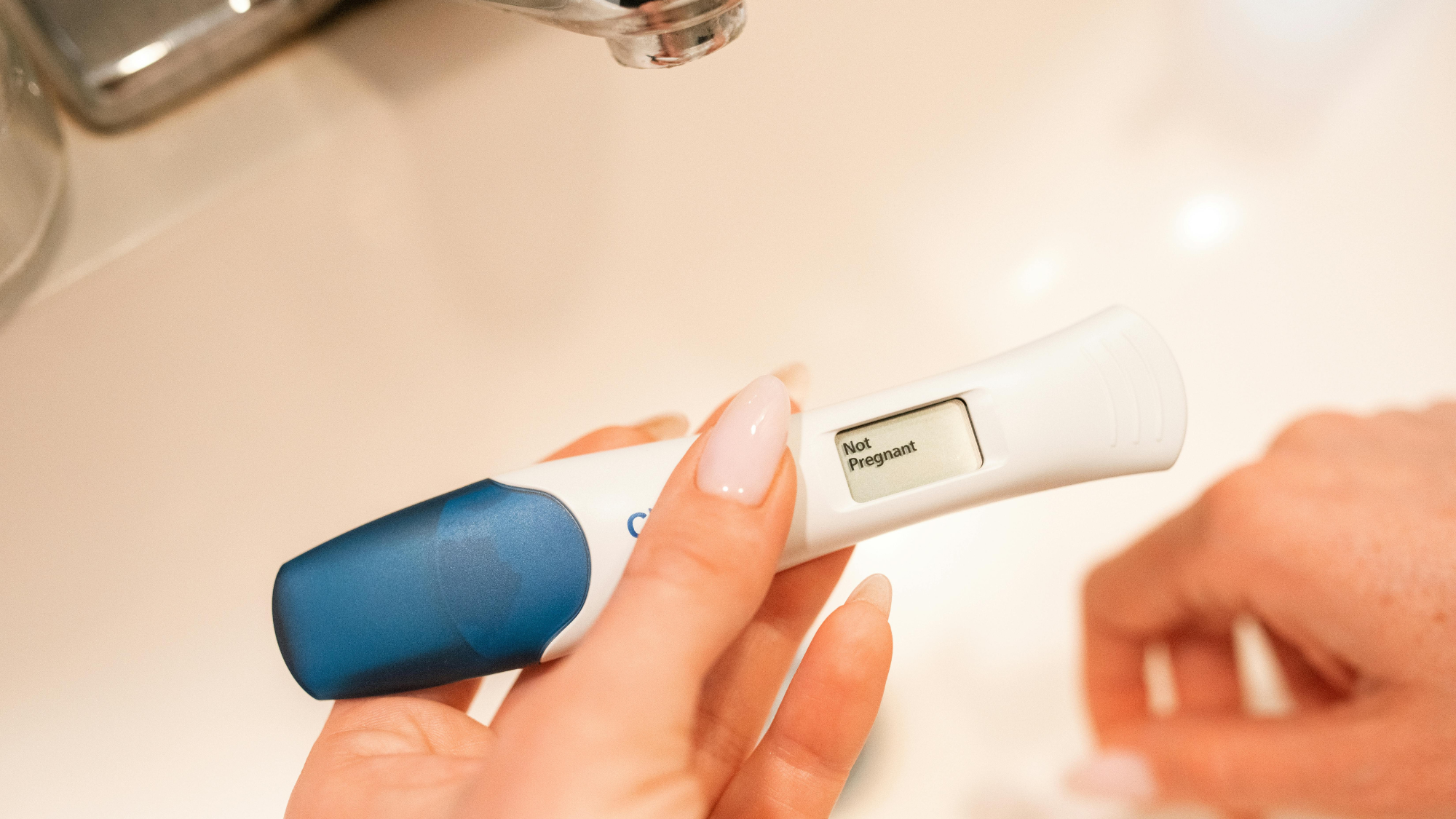
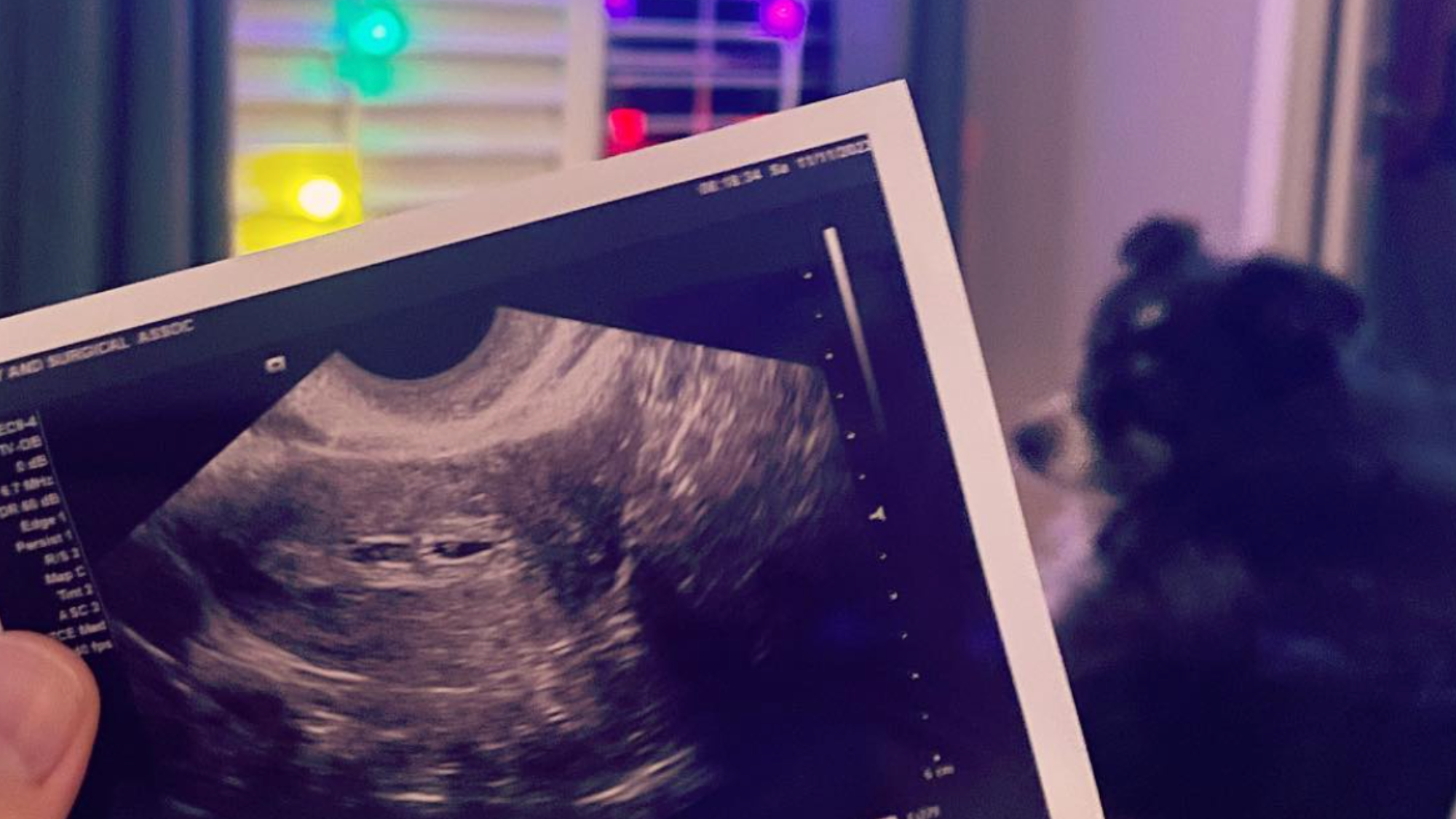
Let me tell you about the worst phone call of my life.
It was a Tuesday afternoon. I was sitting in my bed — because that's where you receive life-altering news, apparently — when my clinic called with my first beta result after my second frozen embryo transfer.
"Your HCG is 1.78."
Silence. My brain buffered like a bad WiFi connection.
One-point-seven-eight. I didn't even know HCG could be that low and still technically be above zero. Most clinics call anything under 5 a negative. Mine didn't — they asked me to come back in 48 hours. So I went home, opened Google, and did the thing you're probably doing right now: I searched for what that number meant and whether I should have hope or start grieving.
That pregnancy ended in a chemical at 6 weeks. But here's the thing — my next transfer resulted in my daughter Sadie, who is currently dismantling my living room with the confidence of a tiny CEO. So I've been on both sides of the beta rollercoaster, and I want to give you the guide I desperately needed during those agonizing days between blood draws.
I'm not a doctor. I'm a woman who obsessively researched HCG for months and lived to tell the tale. Always talk to your RE about your specific numbers. But if you're spiraling at 2 AM, let me at least give you some context.
What Is Beta HCG and Why Are We All Obsessed With It?
Beta HCG (human chorionic gonadotropin) is a hormone produced by the cells that eventually become the placenta after an embryo implants. It's what pregnancy tests detect — both the pee-on-a-stick kind and the blood draw kind.
The blood test is called a "beta" because it measures the beta subunit of HCG specifically. When your clinic says "come in for your beta," they're drawing blood to measure exactly how much HCG is in your system, down to the decimal point.
Here's what makes IVF patients uniquely tortured by this number: we know exactly when our embryo was transferred. We know the exact DPO (days past ovulation) or DPT (days past transfer). We can compare our number against thousands of other women at the same exact point in time. And we do. Oh, we do.
What's a "Good" First Beta?
Not gonna lie — this is where it gets complicated, because the range of "normal" is enormous.
For a 5-day blastocyst transfer (which is the most common FET):
At 9 days post transfer (9dp5dt), which is equivalent to 14 DPO:
- Median HCG for singleton pregnancies: roughly 48–120
- Median HCG for twin pregnancies: roughly 80–200+
- The range for viable singleton pregnancies at this point can be anywhere from about 17 to 400+
At 11 days post transfer (11dp5dt) / 16 DPO:
- Median singleton: roughly 100–300
- Median twins: 200–500+
- Range for viable singletons: about 35 to 1,000+
Here's what nobody tells you: the initial number matters less than what it does next. I've seen women with betas of 30 at 14 DPO go on to have perfectly healthy babies, and women with betas of 300 who didn't. The number itself is a snapshot. The trajectory is the story.
My beta of 1.78? That was legitimately low. That pregnancy didn't make it. But my third transfer — the one that became Sadie — my HCG was 6,512 by 16 days post transfer. Same body, different outcome. Fertility is chaos.
The Doubling Time Obsession
After your first beta, your clinic will bring you back in 48–72 hours for a second draw. What they're looking for is whether your HCG is doubling appropriately.
The general guideline: HCG should roughly double every 48–72 hours in early pregnancy (up to about 6–7 weeks).
But — and this is important — "roughly" is doing a lot of heavy lifting in that sentence.
Here's what the actual data shows:
- At HCG levels below 1,200: doubling time is typically 48–72 hours
- At HCG levels 1,200–6,000: doubling time slows to 72–96 hours
- At HCG levels above 6,000: doubling time can be 96+ hours and that's normal
So if your first beta was 80 and your second beta 48 hours later is 145, your doubling time is about 55 hours. That's perfectly fine, even though it didn't technically "double." An increase of at least 60% in 48 hours is generally considered reassuring in early pregnancy.
What's concerning: a rise of less than 35% in 48 hours, or a plateau, or a drop. These can indicate a chemical pregnancy, ectopic, or non-viable pregnancy. But even here, it's not a death sentence — some women have slow starters that turn into healthy pregnancies. This is the cruelty of the beta game: nothing is certain.
During my second transfer (the one I lost), my HCG was doubling — technically. It went from 1.78 to about 4, then to about 10, then slowly climbed to 125 by 6 weeks. The numbers were rising but they were whispering when they should have been shouting. My gut knew. The numbers confirmed it eventually.
Singleton vs. Twins: Can Your Beta Tell You?
This is the question everyone secretly wants answered, especially if you transferred two embryos.
The honest answer: not reliably. There's so much overlap between singleton and twin HCG ranges that no single beta draw can confirm multiples.
That said, here are the general patterns:
Higher betas can indicate twins, but high betas in singletons are also common. A first beta over 200 at 14 DPO raises the possibility, but plenty of singletons come in that high.
The real indicator is the rate of rise. Twin pregnancies often (not always) show faster-than-average doubling times in the first few weeks, because two embryos = two sources of HCG production.
The only way to confirm twins is ultrasound, usually at 6–7 weeks. Until then, everything is speculation. I know that's not what you want to hear at 2 AM, but it's the truth.
The Numbers That Scare You (and Shouldn't)
Let me address some specific panic scenarios, because I've been in every one of them:
"My beta is low but positive." A positive is a positive. If you're above 5 and your clinic considers it positive, you are technically pregnant in that moment. What matters now is what happens in the next draw. Low starters can absolutely result in healthy babies. My Sadie's first detectable beta was in the normal range, but I've spoken to women whose first betas were in the teens who are now holding babies.
"My beta didn't double in 48 hours." Check the math on your doubling time (there are calculators all over the internet — betabase.info is one). If your doubling time is under 72 hours and your HCG is under 1,200, you're likely in normal range. Don't panic until your doctor panics.
"My beta is high — does that mean twins?" Maybe! But also maybe not. High betas are stressful in their own way (I see you, twin-panic people), but the only way to know is the ultrasound. Try to breathe until then. I know. Easier said than done.
"My second beta went up but not as much as I expected." Run the actual doubling time calculation. Our brains are bad at math when we're anxious. A rise from 120 to 210 in 48 hours is a doubling time of about 57 hours — which is perfectly healthy. It doesn't feel like enough, but it is.
When to Actually Worry
I'm not going to sugarcoat this, because you deserve honesty:
Contact your doctor if:
- Your HCG drops between draws
- Your HCG plateaus (basically the same number twice)
- Your doubling time is consistently over 96 hours at low HCG levels
- You have sharp one-sided pain with slow-rising betas (possible ectopic — take this seriously)
- Your clinic tells you to be concerned (they've seen thousands of these; trust their read)
Don't spiral over:
- A single beta that seems low but is rising appropriately
- A doubling time of 60–72 hours (this is NORMAL, even though your Google search said 48)
- Your number being different from someone else's at the same DPO (the range is huge)
- Your number being different from your last transfer (every pregnancy is different)
What I Wish Someone Had Told Me
Here's what I know now, after three transfers and more beta draws than I can count:
The numbers are important, but they're not the whole story. I had a beta that technically "doubled" and still lost that pregnancy. I had a transfer where everything looked perfect from the start. Same eggs, same clinic, same body — different outcomes.
What got me through was information (so I could understand what was happening), community (so I didn't feel alone at 2 AM), and — eventually — my daughter's heartbeat on a screen at 7 weeks.
If you're in the beta waiting game right now, I won't tell you not to worry. That's useless advice and we both know it. But I will tell you: whatever your number says, you will survive it. You'll survive the good news and the bad news and the ambiguous news. I know because I did.
Hang in there. And if you need me, I'm here — probably also awake at 2 AM, because toddlers.
I'm not a medical professional — just a woman who's lived this. Talk to your RE about your specific numbers. They know your history, your protocol, and your body better than any blog post ever could.